D.O RFID TAG company is a RFID card manufacturers & factory, professional RFID card manufacturers , NFC tags suppliers and RFID Wristband company in shenzhen china for 15 years — Source Quality Products and Enjoy Efficient Service.
NTAG213 NFC button tag, NTAG215 NFC button tag, NTAG216 NFC button tag, NFC chip comparison, NFC button tag chip selection, NFC button tag NTAG213 vs 215 vs 216, NFC Button Tag Manufacturer
Compare NTAG213, NTAG215, and NTAG216 NFC chips for NFC Button Tags. Learn which chip fits access control, authentication, and industrial use.
When sourcing NFC Button Tags, one of the most common questions from B2B buyers is:
Which NFC chip should I choose: NTAG213, NTAG215, or NTAG216?
This page is designed to help you make the right chip decision based on real application needs, not just technical specifications.
Although NTAG213, NTAG215, and NTAG216 all operate at 13.56 MHz and comply with ISO/IEC 14443A, they serve very different purposes.
Choosing the wrong chip may result in:
Insufficient memory
Limited future scalability
Poor user experience
System redesign costs
For NFC Button Tags, chip selection directly affects functionality, cost, and long-term usability.
All NFC Button Tags from dorfidtag support the following NFC chips:
NTAG213
NTAG215
NTAG216
They share the same:
Frequency: 13.56 MHz
Protocol: ISO/IEC 14443A
Passive operation (no battery)
Smartphone compatibility
The key difference lies in memory size and application flexibility.
NTAG213 is the most cost-effective option.
User memory: 144 bytes
Read/write endurance: 100,000 cycles
Data retention: 10 years
Simple ID identification
URL redirection
Basic access control
Static checkpoints
Choose NTAG213 if your NFC Button Tag only needs:
UID recognition
One-time encoding
Fixed system logic
It is ideal for high-volume, price-sensitive projects.
NTAG215 offers a balance between cost and flexibility.
User memory: 504 bytes
Higher data capacity than NTAG213
Stable smartphone interaction
Product authentication
Apparel NFC buttons
Anti-counterfeiting systems
Mid-level data storage
Choose NTAG215 if your project requires:
Encrypted URLs
Authentication logic
Multi-step user interaction
This is the most commonly selected chip for NFC Button Tags used in brand protection.
NTAG216 provides the largest memory capacity.
User memory: 888 bytes
Advanced data structure support
Future-proof design
Maintenance logging
Equipment lifecycle tracking
Interactive industrial systems
Secure authentication platforms
Choose NTAG216 if your NFC Button Tag must:
Store structured data
Support system expansion
Handle multiple NDEF records
It is preferred for industrial and long-term deployments.
| Feature | NTAG213 | NTAG215 | NTAG216 |
|---|---|---|---|
| Frequency | 13.56 MHz | 13.56 MHz | 13.56 MHz |
| Standard | ISO 14443A | ISO 14443A | ISO 14443A |
| User Memory | 144 bytes | 504 bytes | 888 bytes |
| Smartphone Readable | Yes | Yes | Yes |
| Security Capability | Basic | Medium | Advanced |
| Typical Cost Level | Lowest | Medium | Higher |
| Recommended for | Simple ID | Authentication | Data-rich systems |
You need basic identification
Cost control is critical
Data will not change
Authentication is required
Brand protection is involved
You need moderate memory
Data logging is needed
Systems may expand
Long-term flexibility matters
If you are unsure, NTAG215 is the safest default choice for most NFC Button Tag projects.
As a direct manufacturer, dorfidtag provides:
Chip selection guidance
Pre-encoding (UID, URL, NDEF)
Encoding verification
Chip lock configuration
OEM & bulk production support
We help customers avoid over-specification or under-specification.
Website: www.dorfidtag.com
NTAG216 offers significantly more memory than NTAG213, making it suitable for data-rich NFC Button Tag applications.
NTAG215 is the most commonly used chip for NFC Button Tags due to its balance of memory, security, and cost.
Yes. All three chips are readable by NFC-enabled Android and iOS smartphones.
Not always. Basic access control can use NTAG213, while advanced systems may benefit from NTAG216.
Avian Monitoring RFID Microchip for Bird Tracking
More >>
Herpetology Research PIT Tag for Reptiles and Amphibians
More >>
Laboratory Rodent Identification RFID Microchip
More >>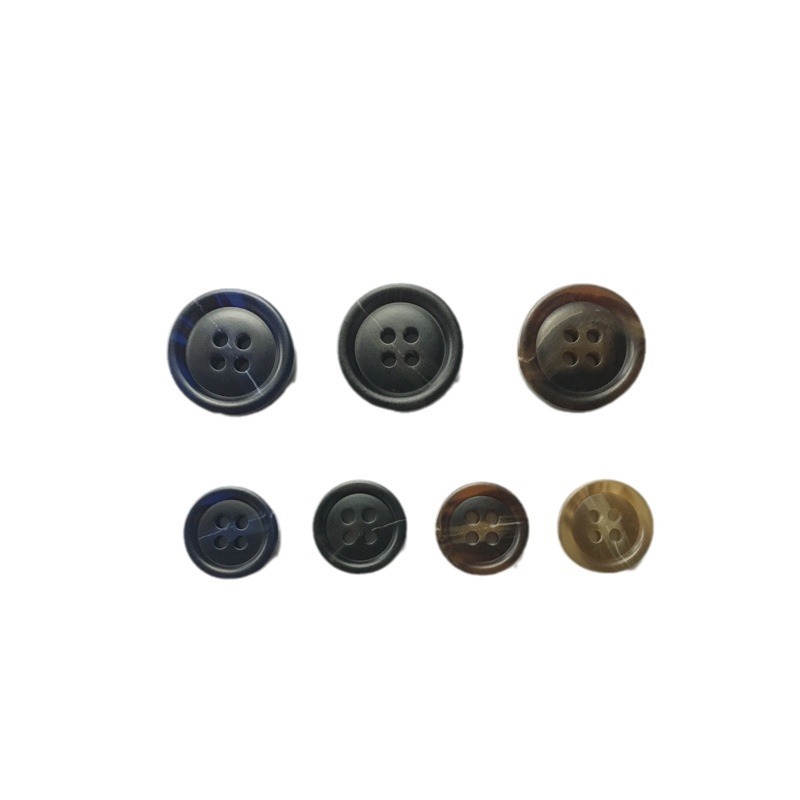
Durable NFC Button Tag with NTAG213 215 216. Ideal for access control, checkpoints, maintenance tracking, and authentication systems.
More >>
379.png)