D.O RFID TAG company is a RFID card manufacturers & factory, professional RFID card manufacturers , NFC tags suppliers and RFID Wristband company in shenzhen china for 15 years — Source Quality Products and Enjoy Efficient Service.
NFC Button Tag vs RFID Button Tag, RFID Button Tag comparison, LF RFID button tag, UHF RFID button tag, HF NFC button tag, 13.56 MHz button tag, RFID Button Tag Manufacturer, industrial RFID button tag
Compare NFC Button Tag with LF and UHF RFID Button Tags. Learn which frequency, chip, and technology fits your access control or industrial application.
When buyers search for RFID Button Tag, they are often comparing different RFID technologies rather than looking for a single product.
This page explains the real differences between NFC Button Tags and other RFID Button Tags, helping system integrators, distributors, and OEM buyers choose the right technology for their project.
An RFID Button Tag is a rugged, button-shaped transponder designed for:
Industrial identification
Access points
Equipment management
Harsh environments
Depending on frequency, RFID Button Tags fall into three main categories:
LF (Low Frequency) Button Tags
HF / NFC Button Tags
UHF Button Tags
Each technology serves very different use cases.
NFC Button Tags operate at 13.56 MHz, compliant with ISO/IEC 14443 standards.
Smartphone-readable (Android & iOS)
Short read range (0–5 cm)
High interaction reliability
Secure communication options
NTAG213
NTAG215
NTAG216
Access control
Smart checkpoints
Maintenance logging
Mobile-based authentication
Interactive equipment systems
NFC Button Tags are often chosen when human interaction or mobile phone compatibility is required.
LF Button Tags operate at low frequency, commonly:
125 kHz
134.2 kHz (FDX-B / HDX)
Very short read range
Strong resistance to metal and liquids
Slow data rate
Not compatible with smartphones
Animal identification
Harsh industrial environments
Legacy systems
LF RFID Button Tags are mainly used in closed systems with dedicated readers.
UHF Button Tags operate under ISO/IEC 18000-6C (EPC Gen2) standards.
Long read distance (up to several meters)
Fast multi-tag reading
Requires UHF readers
Not compatible with NFC phones
Asset tracking
Logistics
Inventory management
Industrial automation
UHF Button Tags are ideal when long-range, bulk reading is required.
| Feature | NFC Button Tag | LF Button Tag | UHF Button Tag |
|---|---|---|---|
| Frequency | 13.56 MHz | 125 / 134.2 kHz | 860–960 MHz |
| Standard | ISO 14443 | ISO 11784/11785 | ISO 18000-6C |
| Read Range | Short | Very short | Long |
| Smartphone Compatible | Yes | No | No |
| Data Capacity | Medium–High | Very low | Medium |
| Anti-collision | Limited | No | Strong |
| Typical Users | Access & mobile systems | Legacy / animal ID | Logistics & assets |
Mobile phones are involved
User interaction is required
Data needs to be updated
Security and flexibility matter
Environment is extremely harsh
Legacy readers are already installed
Simple ID only is needed
Long-range reading is required
Many tags must be read at once
Automation is the priority
The growth of mobile-first systems has pushed NFC Button Tags into wider adoption:
No special reader required
Easy system integration
Lower deployment cost
Better user experience
For many projects, NFC Button Tags replace LF systems while offering better scalability.
As a direct manufacturer, dorfidtag supplies:
NFC Button Tags
LF RFID Button Tags
UHF Button Tags
With:
Chip-level customization
Material and encapsulation options
Pre-encoding & QA verification
OEM and bulk production support
We help customers choose the right technology, not just a product.
NFC Button Tags are a type of RFID Button Tag operating at 13.56 MHz, designed for smartphone interaction, while LF and UHF Button Tags serve different industrial purposes.
In many access control and identification applications, NFC Button Tags can replace LF systems with better compatibility and flexibility.
No. UHF Button Tags require dedicated UHF readers and cannot be read by smartphones.
NFC Button Tags using NTAG213, NTAG215, or NTAG216 are commonly used for modern access control systems.
Laboratory Rodent Identification RFID Microchip
More >>
Salmon and Trout Telemetry PIT Tag for River Monitoring
More >>
ICAR Registration RFID Tag for Livestock and Veterinary Use
More >>
Parylene Coated Animal Microchip for High Retention Tracking
More >>
Durable NFC Button Tag with NTAG213 215 216. Ideal for access control, checkpoints, maintenance tracking, and authentication systems.
More >>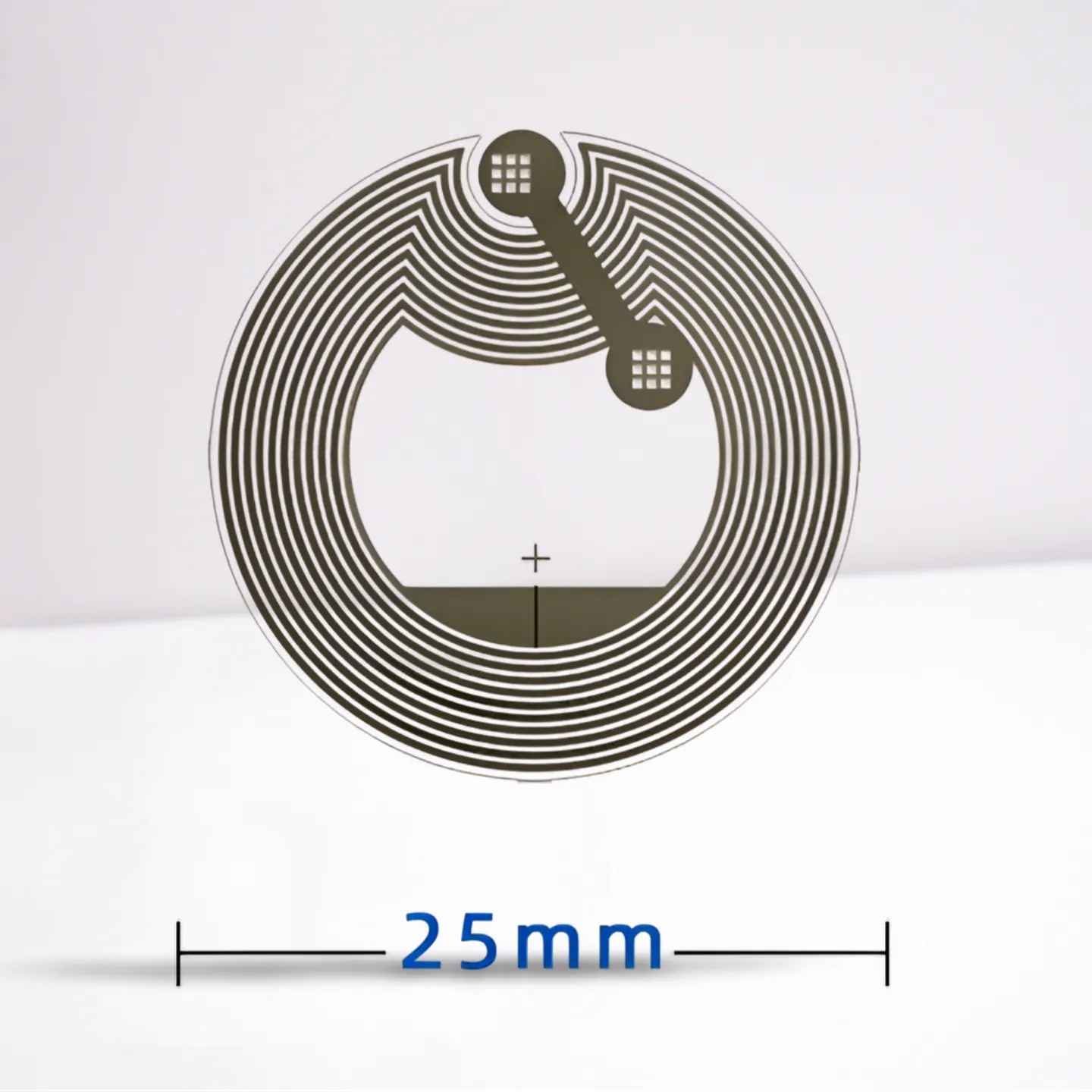
379.png)