
D.O RFID TAG company is a RFID card manufacturers & factory, professional RFID card manufacturers , NFC tags suppliers and RFID Wristband company in shenzhen china for 15 years — Source Quality Products and Enjoy Efficient Service.
# RFID Standards: The Cornerstone of Intelligent Identification Systems
In today's digital age, Radio Frequency Identification (RFID) technology has become a key enabler for numerous industries to achieve automation and intelligent management. From precise tracking in logistics and supply chains to efficient management of medical equipment, from rapid inventory management in retail to seamless passage in intelligent transportation, RFID technology is ubiquitous. However, to ensure that these applications can operate seamlessly and efficiently on a global scale, RFID standards play an indispensable role. This article delves into the importance of RFID standards, their classification, specific standard details, and their value in practical applications, helping readers gain a comprehensive understanding of the core framework in this technological domain.
## I. The Importance of RFID Standards
### A. Enhanced Security
Security is paramount in data transmission. RFID standards specify encryption protocols, data formats, and transmission rules to ensure that data transmitted between tags and readers cannot be intercepted or tampered with. For instance, the EPC UHF Gen2v2 standard introduces multiple encryption modes and dynamic encoding methods, significantly enhancing data transmission security. This is particularly crucial for industries dealing with sensitive information, such as finance and healthcare.
### B. Ease of Use and Global Compatibility
RFID standards are designed to ensure seamless compatibility between RFID tags and readers produced by different manufacturers. Whether in a European retail store, a U.S. logistics warehouse, or an Asian manufacturing plant, as long as the standards are followed, RFID devices can achieve global interoperability. This global compatibility greatly reduces operational costs for businesses and enhances supply chain efficiency.
### C. Operational Safety
For specific applications such as human-implanted RFID tags or animal tracking tags, operational safety is the top priority. Regulatory bodies analyze the intensity and nature of different frequency wavelengths on tags to ensure that these devices are safe for use in or around humans and animals. For example, the ISO 14443 standard, which governs Near Field Communication (NFC) technology, ensures its safety in human contact environments.
## II. Classification of RFID Standards
### A. Industry-Specific RFID Standards
Different industries have unique demands for RFID technology. For example, the veterinary services industry requires RFID tags that can withstand animal living environments and are harmless to animals, while the security and tracking industry focuses more on the tamper-proof capabilities and high-precision positioning functions of RFID tags. These industry-specific standards provide precise technical specifications for particular application scenarios to ensure that RFID technology meets industry needs.
### B. Global RFID Standards
Global RFID standards are established by international organizations such as ISO and GS1 to provide a unified technical framework for RFID operations worldwide. These standards cover a wide range of frequencies from Low Frequency (LF) to Ultra-High Frequency (UHF) and are applicable to various application scenarios. For example, the ISO/IEC 18000 series of standards provides detailed communication protocols and physical interaction specifications for RFID devices across different frequencies, ensuring global device compatibility.
### C. Regional RFID Standards
Different regions have varying regulations for radio frequency spectrum allocation and usage, leading to the development of regional RFID standards. For example, the FCC Part 15 in the United States stipulates the rules for using RFID devices in the Industrial, Scientific, and Medical (ISM) frequency bands, ensuring that these devices do not interfere with other radio equipment. These regional standards provide compliance guidance for local RFID applications and also serve as a reference for multinational companies operating in different regions.
### D. National RFID Standards
In addition to global and regional standards, some countries develop national RFID standards based on their own needs. These standards typically combine the requirements of international and regional standards while considering the country's industrial policies, technological development levels, and market demands. For example, China has established a series of national standards for RFID technology to regulate the domestic market and promote the development of the local industry.
## III. RAIN RFID Standard Developers
RAIN RFID is an important branch of RFID technology that connects billions of items to the Internet, enabling widespread applications in the Internet of Things (IoT). EPC UHF Gen2v2 or ISO/IEC 18000-63 are the core standards governing RAIN RFID networks. These standards are jointly developed by international organizations such as GS1, ISO, IEC, and JTC1 to ensure global compatibility and efficient operation of RAIN RFID technology. For example, the Gen2v2 standard not only offers multiple modes and dynamic encoding methods but also supports fast data transmission rates and enhanced security, making it an ideal choice for modern IoT applications.
## IV. Detailed Guide to RFID Standards
### A. ISO/IEC 18000 Series Standards
The ISO/IEC 18000 series of standards is at the core of RFID technology, covering a wide range of frequencies from Low Frequency (LF) to Ultra-High Frequency (UHF). Here are the main contents of these standards:
- **ISO/IEC 18000-1**: Specifies the general architecture concepts for RFID identification, providing the foundational framework for the design and development of entire RFID systems.
- **ISO/IEC 18000-2**: Defines the communication parameters between Low Frequency (LF) RFID tags and interrogators, suitable for applications such as animal identification and access control.
- **ISO/IEC 18000-3**: Provides communication guidelines for High Frequency (HF) tags operating at 13.56 MHz, widely used in contactless smart cards and electronic passports.
- **ISO/IEC 18000-4**: Highlights the communication protocols for RFID devices operating at 2.45 GHz, suitable for industrial automation and logistics tracking.
- **ISO/IEC 18000-6**: Specifies the physical interactions of passive RFID systems in the 860 to 960 MHz range, the most widely used UHF RFID standard, applicable to retail, logistics, manufacturing, and many other fields.
- **ISO/IEC 18000-7**: Defines the communication interface for active RFID devices operating at 433 MHz, suitable for long-range tracking and monitoring applications.
### B. ISO 14443 and ISO 15693
- **ISO 14443**: Specifies the use of Near Field Communication (NFC) technology in proximity cards, widely used in contactless payment and access control. This standard ensures efficient communication and security for NFC devices over short distances.
- **ISO 15693**: Specifies the operation of proximity cards using near-field inductive coupling, suitable for applications such as library management systems and asset tracking. This standard offers longer read ranges and higher data transmission rates.
### C. EPCglobal/GS1 Gen 2
EPCglobal (now GS1) created this standard in 2013, and ISO 18000-6C was approved in 2015. This standard details the communication interface parameters for RFID tags operating in the 860-960 MHz frequency range. The latest version, Gen2v2, offers multiple modes, dynamic encoding methods, fast data transmission rates, additional commands, enhanced security, four-session operations, randomly generated numbers to protect data, and more programmability. This standard has become an essential technical specification for modern logistics, retail, and manufacturing industries.
## V. Conclusion
RFID standards are the cornerstone of ensuring the security, compatibility, and effectiveness of RFID systems. By establishing unified technical specifications, RFID standards not only enhance data transmission security but also achieve global device compatibility, providing precise technical support for various industries and application scenarios. Understanding and complying with these standards is crucial for manufacturers and users. It can help businesses reduce operational costs, improve supply chain efficiency, and provide safer and more convenient service experiences for end-users.
In practical applications, selecting and implementing the appropriate RFID standards requires a comprehensive consideration of application scenarios, technical requirements, and compliance needs. For example, in the logistics sector, companies may prioritize the ISO/IEC 18000-6 standard to achieve efficient inventory management and goods tracking, while in the medical field, the ISO 14443 standard is more suitable for contactless identification and management of medical equipment. By gaining an in-depth understanding of the role and importance of RFID standards, businesses can better leverage this technology to drive their digital transformation and intelligent upgrade.
In summary, RFID standards are not just a collection of technical specifications but also a key force in driving industry development and enhancing user experiences. As IoT technology continues to evolve, RFID standards will continue to play an important role in building a smarter, more efficient, and safer digital world.
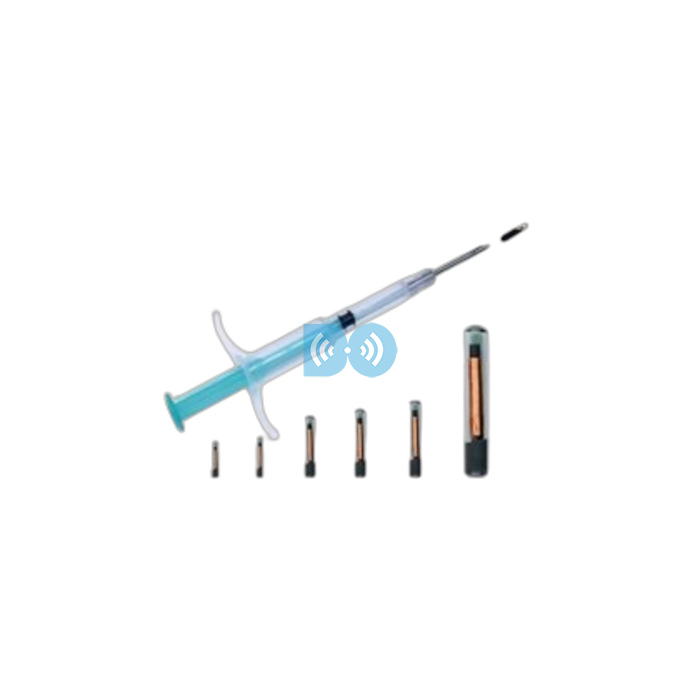
Avian Monitoring RFID Microchip for Bird Tracking
More >>
Herpetology Research PIT Tag for Reptiles and Amphibians
More >>
Laboratory Rodent Identification RFID Microchip
More >>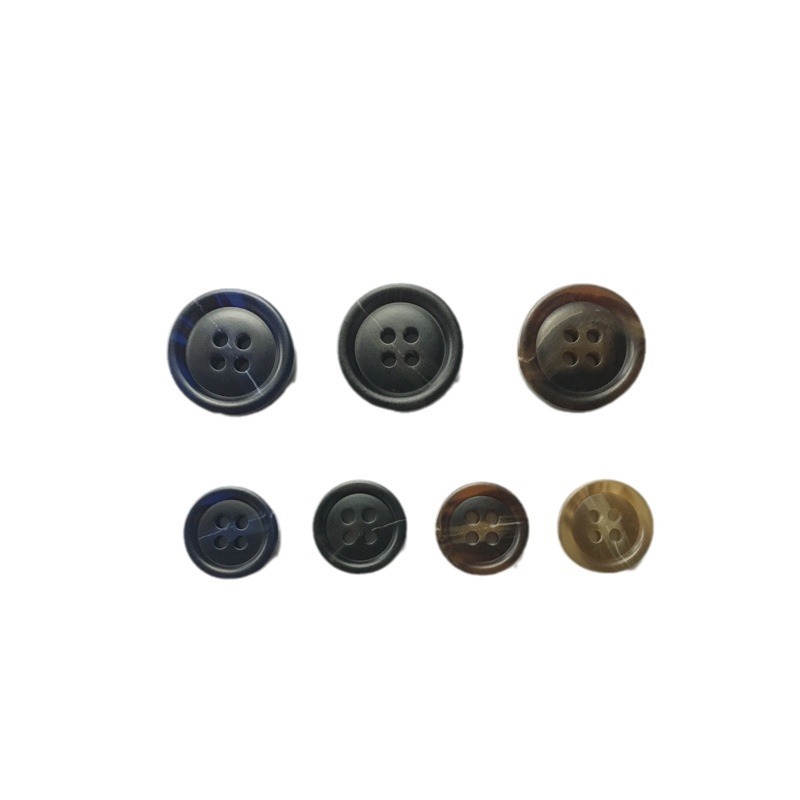
Durable NFC Button Tag with NTAG213 215 216. Ideal for access control, checkpoints, maintenance tracking, and authentication systems.
More >>
379.png)