D.O RFID TAG company is a RFID card manufacturers & factory, professional RFID card manufacturers , NFC tags suppliers and RFID Wristband company in shenzhen china for 15 years — Source Quality Products and Enjoy Efficient Service.
An RFID chip is a self-contained radio transceiver that has learned to survive without wires or batteries. Encapsulated in a sliver of silicon no larger than a sesame seed, it carries an integrated circuit that stores data, a microscopic antenna that harvests electromagnetic energy, and a state machine that modulates reflected radio waves to speak its identity. When an interrogator floods the vicinity with radio energy, the coil etched around the die harvests micro-watts of power, energises the logic, and replies with a precisely timed burst of ones and zeros. The entire transaction—from power-up to shut-down—lasts less than a millisecond, yet it conveys everything from a pet’s vaccination record to the last calibration date of a surgical robot.
Early adopters recognised these traits decades ago. Access-management turnstiles embedded the first chips behind plastic badges, followed by library self-checkout stations that needed a silent, line-of-sight-free replacement for barcodes. Time-and-attendance clocks soon replaced punch cards with a tap of a wristband. National ID programmes in the Gulf and electronic health-record bracelets in Scandinavian hospitals proved the technology could survive gamma sterilisation and the human immune system alike.
Harry Stockman’s 1982 IEEE paper “Communication by Means of Reflected Power” reads today like prophecy. He proposed that every object could be given a unique electromagnetic signature and tracked without direct contact. The idea lay dormant until 1994, when MIT’s Auto-ID Center, led by Professor Sandy Pentland and researcher David Brock, coined the term “RFID” and began drafting the Electronic Product Code. By 2000, consumer-goods giants Gillette, Procter & Gamble, Motorola and UPS were tagging pallets and cases in live pilots. In 2002 alone, more than one hundred and ten million items carried Gen-1 chips; forklift-mounted interrogators streamed EPC numbers to handheld computers, proving that a warehouse could be inventoried in minutes, not days.
Power choices define personality. Passive chips sip energy from the reader’s own signal, reaching out ten centimetres at 125 kHz or twenty-five metres at 915 MHz depending on antenna geometry and local regulations. Active chips carry a lithium coin cell, wake on an internal timer or external trigger, and can broadcast across football fields. Semi-passive hybrids dedicate the battery to on-board sensors—temperature, humidity, vibration—while still harvesting reader energy for communication, giving cold-chain loggers a five-year life span with hourly uploads.
No matter the power source, every Gen2v3 chip begins the conversation by back-scattering a continuous wave. The reader detects phase shifts as tiny as half a degree, decodes the Manchester-encoded payload, and optionally issues write commands to update user memory. Forward error correction and session-based random numbers ensure that two hundred tags in the same interrogation zone reply without collision, a feat orchestrated by the Q-algorithm baked into silicon.
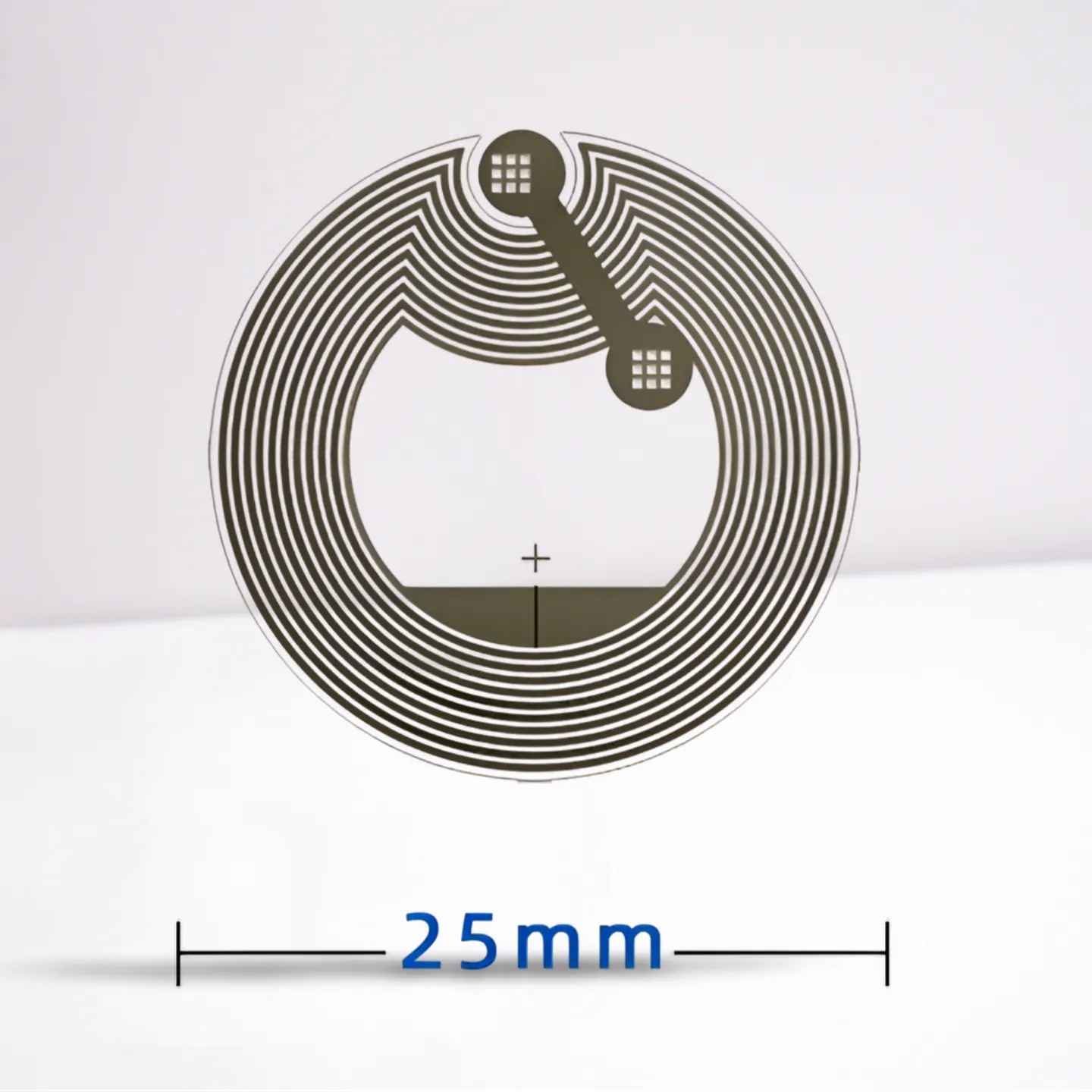
Beneath the epoxy or glass capsule lies a three-layer stack. The silicon die itself contains an analog front end that rectifies the RF signal, a digital logic block that handles anti-collision and memory arbitration, and non-volatile memory split into four banks: a factory-locked Tag ID, an Electronic Product Code bank up to 496 bits, a user memory array up to 64 k bits, and a password bank protected by 256-bit AES keys. The antenna—copper etched on polyimide for flex tags, silver ink printed on PET for disposable labels, or ceramic-loaded for metal-mount tags—determines resonance frequency and gain. A polyimide or glass overlay shields the assembly from mechanical stress and chemical wash-downs.
Bidirectional dialogue is the hallmark of modern systems. A reader connected to a warehouse management system broadcasts a Query command; chips within the beam width respond with a 16-bit random number. The reader selects one, issues an ACK, and receives the full EPC. If the tag must be updated—say, to log a temperature excursion—the reader issues a Req_RN followed by a Write command and an HMAC signature. All of this happens in less than five milliseconds, fast enough for conveyor belts running at 600 feet per minute.
Silicon route: the classic CMOS die, wire-bonded to an etched copper antenna, encapsulated in epoxy or glass. Examples include NXP’s UCODE 9XM for 915 MHz retail labels and EM Microelectronics’ EM4305 for 125 kHz animal tags.
PCB route: a printed circuit board substrate carries an etched copper coil and a flip-chip die, delivering robust performance on reusable pallets.
Printed-electronics route: silver nanoparticle ink is ink-jet printed onto flexible PET, creating bendable tags for curved bottles or wearable wristbands at sub-cent cost.
Reader variations range from palm-sized USB sticks for desktop programming to ceiling-mounted phased arrays that can read two hundred tags per second across a thirty-foot aisle.
Low-frequency territory spans 30 kHz to 500 kHz, with 125 kHz and 134.2 kHz as workhorses for animal identification and automotive immobilisers. Read range is modest—ten centimetres in free space, two centimetres when mounted on a steel door—but the magnetic field slips effortlessly through water and metal. Typical silicon: EM4200, TK4100, ATA5577, Hitag 1, Hitag 2.
High-frequency chips dance at 13.56 MHz under the ISO 15693 and 14443 umbrellas, powering NFC smartphones, subway tokens, and ski-resort passes. Range tops out at one metre with a fifteen-centimetre diameter coil, and the carrier supports data rates up to 848 kbps. Silicon stars include NXP ICODE SLIX2, MIFARE Classic 1K, MIFARE Ultralight EV1 and MIFARE Plus.
Ultra-high-frequency spans 860 MHz to 960 MHz, regionally split: 865–868 MHz in Europe, 902–928 MHz in North America, 920–925 MHz in Japan and China. Impinj’s M800 series reaches twenty-five metres in open air, while Alien’s Higgs-9 balances sensitivity and cost for retail labels. Metal-mount variants add ferrite backing to detune the antenna away from metallic surfaces.
Microwave chips at 2.45 GHz (ISO 18000-4) offer thirty-metre range and true line-of-sight behaviour, popular in highway ETC lanes and container ports. Active tags such as Savi Technology’s ST-654 use this band to beacon once every ten seconds for five years on a single battery.
Authentication follows three pillars: privacy ensures only authorised interrogators can read the tag, security prevents spoofing or cloning, and convenience demands sub-second throughput. Each authorised tag carries an encrypted credential; when a tagged carton crosses a dock door, the reader validates the credential against a cloud database and records the event in an immutable ledger. The same principle scales down to door readers that verify employee badges and up to national ID programmes that validate passports at immigration kiosks.
RFID signals are low-power and easily attenuated by concrete, metal shelving, and human bodies. Gen2v3 mitigates eavesdropping with session keys that expire after four billion transactions. The European Union’s 2024 privacy mandate requires retailers to supply a metallic sleeve that attenuates the signal until purchase. China’s Personal Information Protection Law 2024 draft explicitly forbids storing biometric templates in access-control chips. Meanwhile, NXP’s UCODE DNA adds a per-read dynamic signature that invalidates replay attacks, and Impinj’s M800 incorporates a tamper loop that erases memory if the package is opened.
Retail shelves now sport electronic labels that update prices in milliseconds when headquarters runs a flash sale. Automated toll plazas in Bangkok read 2.45 GHz windshield tags at 160 km/h without slowing traffic. E-tickets for the 2024 Esports World Cup in Riyadh embed HF chips that grant VIP lounge access with a tap. Robots in Amazon’s newest fulfilment centre navigate using passive UHF tags taped to the floor like invisible tram lines. Supply-chain managers track everything from avocados to aircraft engines, while security guards patrol campuses using wristbands that log checkpoints automatically.
Barcodes still rule where items are stacked or where cost must be shaved to the bone, but where durability, data depth, or speed matter, RFID chips are now the default substrate of global logistics.
Send an email to [email protected] or WhatsApp +86-138-0000-0000 for free engineering samples, live demo videos, and same-day quotations. We ship worldwide and offer volume pricing from five thousand pieces upward.
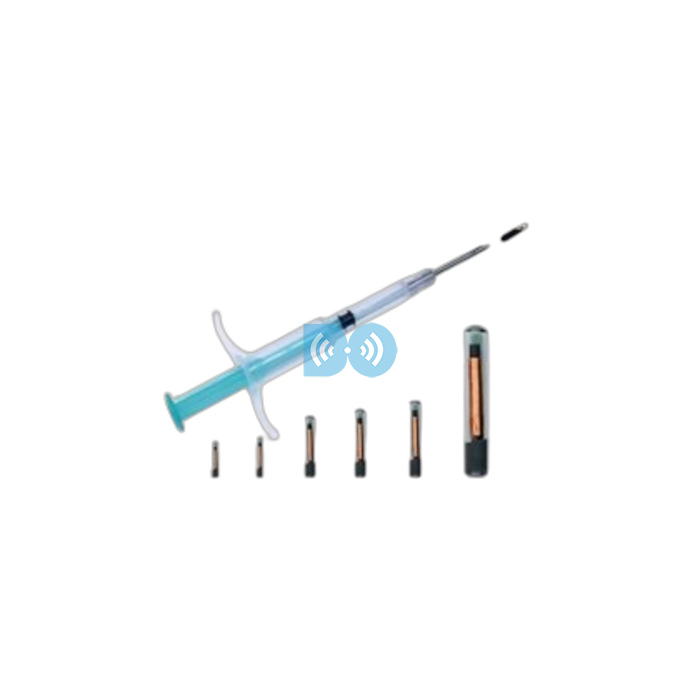
Avian Monitoring RFID Microchip for Bird Tracking
More >>
Herpetology Research PIT Tag for Reptiles and Amphibians
More >>
Laboratory Rodent Identification RFID Microchip
More >>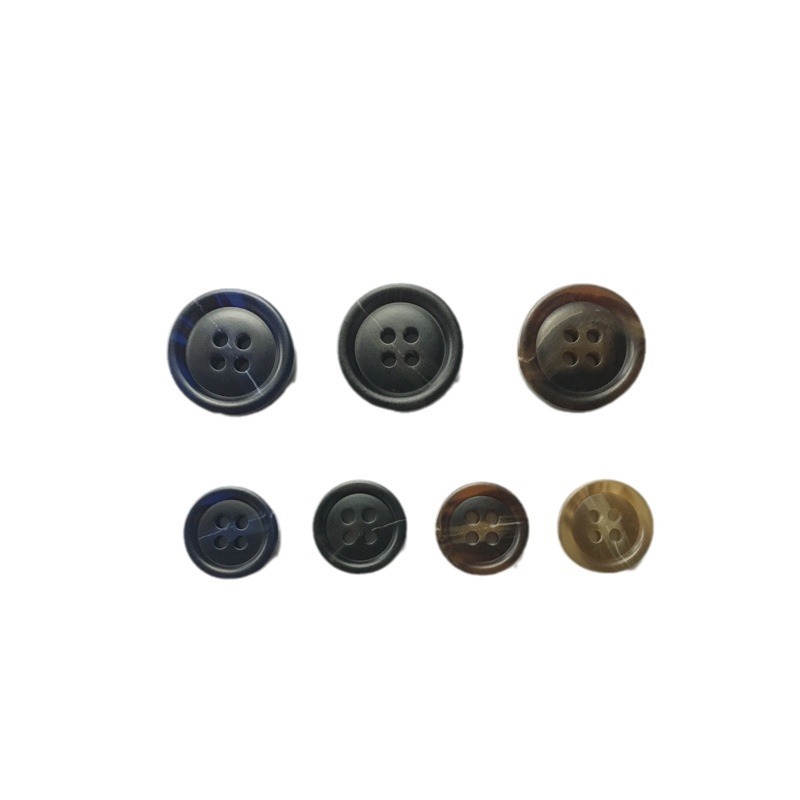
Durable NFC Button Tag with NTAG213 215 216. Ideal for access control, checkpoints, maintenance tracking, and authentication systems.
More >>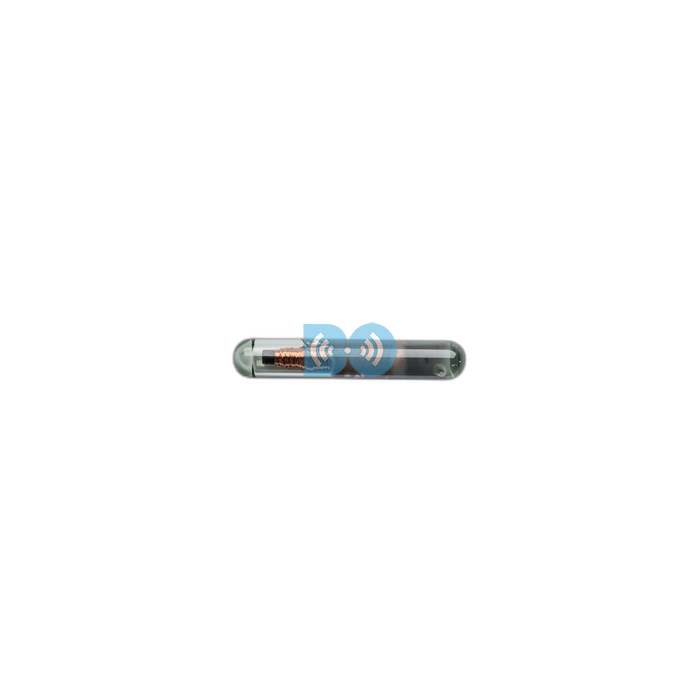
379.png)