
D.O RFID TAG company is a RFID card manufacturers & factory, professional RFID card manufacturers , NFC tags suppliers and RFID Wristband company in shenzhen china for 15 years — Source Quality Products and Enjoy Efficient Service.
How to Prevent PIT Tag Migration and Loss in Fisheries Research Projects
For marine biologists, hatchery managers, and environmental monitoring teams engaged in aquatic research, the accuracy and long-term viability of Passive Integrated Transponder (PIT) tag data are paramount. A persistent challenge in fish telemetry projects is the phenomenon of tag migration or expulsion, which directly compromises data integrity, introduces significant bias, and can invalidate years of meticulous field work. Our factory-direct RFID manufacturing expertise targets this specific issue by offering advanced PIT tags engineered for superior tissue adhesion and retention.
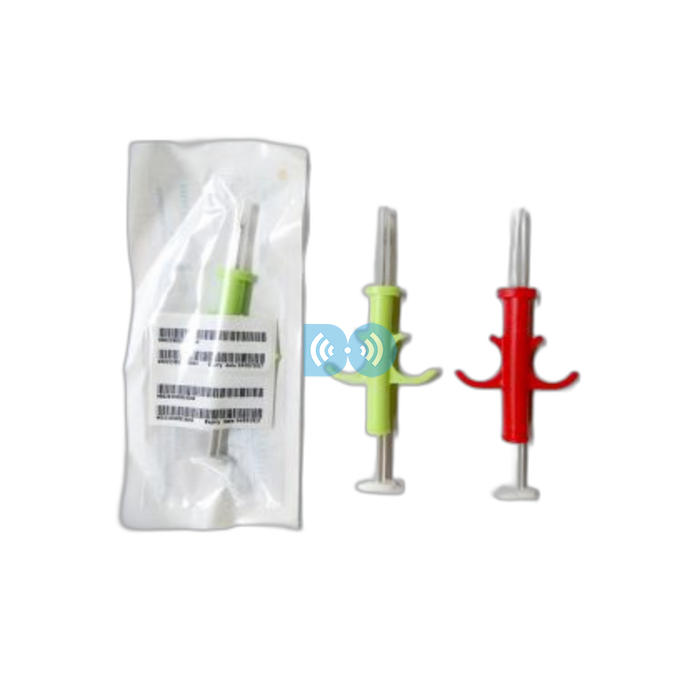
Traditional glass transponders, while biocompatible, present a smooth surface that can hinder stable encapsulation within fish tissue over extended periods. This often leads to subcutaneous migration or, worse, complete tag loss. Recognizing this, our engineering team has developed and refined a parylene coated animal microchip specifically designed to mitigate tag loss in fish by significantly increasing the interface adhesion between the biocompatible glass shell and the surrounding tissue.
Parylene, a medical-grade polymer, creates a micro-textured surface that promotes fibroblasts growth and tissue integration, effectively anchoring the transponder in place. This anti-migration coating is a critical factor in ensuring consistent pit tag fish tracking data, especially for long-duration studies involving salmon telemetry, trout tracking, and other migratory species.
Operating at the globally recognized 134.2 kHz frequency and compliant with ISO 11784 / 11785 protocol, our PIT tags ensure seamless integration with existing telemetry systems, including instream antenna arrays and fixed readers for fish passage monitoring in challenging river environments.
While the parylene coated design dramatically improves retention, successful long-term implantation also relies on proper injection techniques. Our factory-verified guidelines emphasize specific methods for sub-dermal or intra-peritoneal placement that, when combined with our advanced transponders, maximize long-term implantation success. These best practices are crucial for projects focused on fish passage evaluation, habitat utilization studies, and assessing the effectiveness of hydropower environmental monitoring systems.
Our transponders are robustly designed for the demanding conditions encountered in marine biology and wildlife conservation applications, including extreme temperature fluctuations from −25°C to 85°C and prolonged aquatic exposure. This ensures reliability for river telemetry arrays and other outdoor deployments where data consistency is non-negotiable.
As an OEM/ODM manufacturing facility, we understand the nuanced requirements of large-scale telemetry projects and specialized research. We provide ICAR certified RFID transponders, ensuring global compatibility and data standardization. Our commitment to quality is further underscored by RoHS compliance, guaranteeing environmentally responsible components.
We offer extensive customization capabilities, including duplicate-free UID management, sequential ID encoding, and OEM labeling to streamline your procurement and deployment workflows. To facilitate your project's success and validate performance in your specific aquatic environments, we encourage you to request free pre-coated sample tags for field validation and retention tests. This allows fisheries telemetry engineers and environmental consultants to assess tissue retention and system compatibility firsthand.
| Feature | Specification |
|---|---|
| Frequency | 134.2 kHz |
| Protocol | ISO 11784 / 11785 |
| Shell Material | Biocompatible Glass + Parylene Coating |
| Certifications | ICAR certified, RoHS |
| Operating Temperature | -25°C to 85°C |
For fisheries biologists, telemetry engineers, environmental consultants, and government wildlife agencies seeking reliable and field-proven animal RFID identification solutions, our factory-direct approach ensures competitive pricing, consistent quality, and responsive technical support. We are experienced in collaborating on complex projects, from hydropower environmental monitoring systems to extensive wildlife monitoring equipment deployments.
Our minimum order quantity (MOQ) is 20pcs, with a standard lead time of 7-10 working days for production. We are prepared to discuss your specific project needs, including custom UID encoding, sterile syringe packaging, and large-volume orders.
To ensure optimal integration and long-term performance, we invite laboratory procurement teams and veterinary identification distributors to connect with our export sales and engineering team. Request a detailed quotation, explore our customization options, or access free testing stock samples for compatibility validation and large-scale deployment evaluation. Partner with us to enhance the accuracy and longevity of your critical fish tracking data.
If you want to ask anything just fill in the form below and send us. We will contact you within 12 hours.
Biomark Compatible PIT Tag Manufacturer for Fish Telemetry
More >>
How to Prevent PIT Tag Migration and Loss in Fisheries Research Projects
More >>
23mm HDX Long Range PIT Tag for Open River and Large Wildlife Tracking
More >>
12mm HDX High Performance PIT Tag for Specialized Aquatic Research
More >>