D.O RFID TAG company is a RFID card manufacturers & factory, professional RFID card manufacturers , NFC tags suppliers and RFID Wristband company in shenzhen china for 15 years — Source Quality Products and Enjoy Efficient Service.
In the fast-paced world of industrial laundries, where hundreds or even thousands of textiles are processed daily—from heavy-duty work uniforms to large batches of hotel linens—tracking assets efficiently is a constant challenge. Traditional tracking methods, such as manual counting or barcode labels, often fail to withstand the harsh conditions of industrial washing: high temperatures (up to 95°C/203°F), strong chemical detergents, and repeated tumble drying. This is where RFID silicone laundry tags step in as a game-changer. Designed to endure the most rigorous laundry cycles while maintaining reliable performance, these tags solve the critical pain points of industrial laundry operations: tag damage, lost assets, and inefficient processing.
If you’re looking to understand how RFID technology transforms industrial textile tracking, start with our comprehensive guide, RFID Laundry Tag: The Complete Guide to Smart Textile Tracking in 2025, which covers the full spectrum of RFID laundry solutions. In this article, we’ll dive deep into why RFID silicone laundry tags are the top choice for industrial laundries, how they compare to other tag materials, and how to implement them for maximum efficiency.
Industrial laundries operate under extreme conditions that break down lesser tag materials. Let’s compare RFID silicone laundry tags to two common alternatives—textile RFID tags and barcode labels—to highlight their unique advantages.
Industrial washing machines often run at temperatures between 60°C and 95°C to remove tough stains from workwear, food service linens, and healthcare textiles. RFID silicone laundry tags are engineered to withstand these high temperatures without degrading. Unlike textile tags, which may shrink or lose flexibility after repeated exposure to heat, silicone tags retain their shape and functionality.
Testing by independent labs (per AATCC Test Method 61, a global standard for textile durability) shows that high-quality silicone tags can endure over 500 wash cycles at 95°C—far exceeding the 200-cycle average of textile tags. For example, a large industrial laundry in Germany that processes 50,000 work uniforms weekly switched to silicone tags and reduced tag replacement costs by 65% in the first year, as fewer tags were damaged during high-temperature washes.
Industrial laundries rely on strong chemicals, such as bleach, enzymes, and alkaline detergents, to sanitize and clean textiles. Barcode labels and even some textile RFID tags are prone to fading, peeling, or corrosion when exposed to these substances. Silicone, however, is chemically inert—it repels liquids and resists breakdown from harsh cleaners.
A case study from a U.S.-based industrial laundry servicing manufacturing plants found that barcode labels on mechanic uniforms lasted only 10–15 washes before becoming unreadable. After switching to RFID silicone laundry tags, the same uniforms retained functional tags for over 300 washes, eliminating the need for frequent re-labeling and reducing labor time spent on manual tracking.
Industrial textiles are subjected to rough handling: heavy sorting, high-speed spinning in washers, and tumbling in dryers. RFID silicone laundry tags are flexible yet tough, able to bend without cracking and resist tearing. Their seamless, sealed design also prevents water or dirt from seeping into the tag’s internal chip—unlike textile tags, which can absorb moisture and cause chip malfunctions.
For instance, an industrial laundry in the UK that services construction companies reported a 40% reduction in lost assets after adopting silicone tags. Previously, textile tags on construction uniforms would fray or detach during washing, leading to unidentifiable items and costly replacements. Silicone tags, with their durable construction, stayed attached and readable, even on thick, heavy-duty fabrics.
Choosing the right installation method for RFID silicone laundry tags is critical to ensuring long-term performance. The method depends on the type of textile (e.g., thick workwear vs. lightweight linens) and the laundry’s processing workflow. Below are the three most effective techniques, along with step-by-step guidance.
Sewing is the most secure installation method for thick, durable textiles like work uniforms, coveralls, and industrial towels. It ensures the tag stays in place even during high-tumble drying and rough handling.
Step-by-Step Process:
Select a heavy-duty thread (polyester or nylon) that matches the textile color to maintain a professional look.
Position the silicone tag in a discreet location—such as the inside seam of a uniform collar or the corner of a towel—to avoid friction during washing.
Sew around the tag’s edges using a zigzag stitch (for flexibility) or a straight stitch with 2–3 passes for extra security.
Trim excess thread to prevent snagging on other textiles during processing.
Best For: Construction uniforms, mechanic overalls, and industrial blankets.
Case Example: A Canadian industrial laundry servicing mining companies uses sewing to attach silicone tags to miners’ workwear. The tags have remained intact for over 400 wash cycles, with zero detachment reported.
Heat sealing is a popular choice for industrial laundries processing high volumes of textiles, as it’s faster than sewing and works well with lightweight to medium-weight fabrics (e.g., hotel linens, restaurant napkins).
Step-by-Step Process:
Use a commercial heat sealer (adjusted to 150–180°C) compatible with silicone materials.
Place the silicone tag on the textile’s surface (avoid seams, as heat may damage thread).
Apply pressure for 5–10 seconds to bond the tag’s adhesive backing to the fabric.
Allow the tag to cool for 20 seconds before handling to ensure a strong bond.
Best For: Hotel sheets, tablecloths, and healthcare bed linens.
Pro Tip: Test the heat sealer on a scrap piece of fabric first to avoid burning or discoloring the textile. A U.S. laundry servicing 20+ hotels uses heat sealing to process 10,000 linens daily, cutting installation time by 70% compared to sewing.
Snap-on fasteners are a versatile option for textiles that need occasional tag removal (e.g., rental uniforms) or for fabrics that are too thick for sewing or heat sealing.
Step-by-Step Process:
Choose a snap-on kit designed for RFID silicone tags (ensure the fasteners are rust-resistant, as they’ll be exposed to water).
Attach the male snap to the silicone tag and the female snap to the textile (use a hammer or press tool for secure installation).
Test the snap to ensure it’s tight—loose fasteners can lead to tag loss during washing.
Best For: Rental workwear, event linens, and temporary textile assets.
Advantage: A European laundry that rents uniforms to catering companies uses snap-on tags. When a uniform is retired, the tag can be removed and reused on a new uniform, reducing material costs by 30%.
To illustrate the impact of RFID silicone laundry tags, let’s look at a case study of a mid-sized industrial laundry in France (we’ll call it “Lavanderie Industrielle Paris,” or LIP) that services manufacturing plants, hotels, and hospitals.
Before adopting RFID silicone tags, LIP faced two major issues:
High Tag Damage: The laundry used textile RFID tags, which failed after 150–200 washes. This led to 15% of textiles being unidentifiable each month, resulting in \(12,000 in lost assets (e.g., uniforms, linens) and \)8,000 in replacement tags.
Inefficient Processing: Manual sorting of unidentifiable textiles took 4 hours daily, delaying delivery to clients and increasing labor costs.
LIP switched to UHF RFID silicone laundry tags (compatible with their existing Zebra RFID readers) and implemented heat sealing for linens and sewing for uniforms. They also integrated the tags with their RFID laundry management system to track textiles from intake to delivery.
After 6 months of use:
Tag Loss Reduced by 30%: Only 5% of textiles were unidentifiable, as silicone tags withstood up to 400 washes without damage.
Labor Time Cut by 25%: Automated sorting via RFID eliminated manual checks, saving 10 hours of labor weekly.
Client Satisfaction Improved: Delivery times shortened by 15%, leading to a 20% increase in repeat business from manufacturing clients.
As LIP’s Operations Manager, Marie Dubois, noted: “RFID silicone laundry tags have transformed our workflow. We no longer waste time replacing damaged tags or sorting unidentifiable linens—our team can focus on processing more orders and delivering better service.”
Not all RFID silicone laundry tags are created equal. To ensure you select a product that meets industrial laundry needs, keep these factors in mind:
Industrial laundries often use UHF RFID readers (e.g., Impinj, Zebra) for long-range, bulk scanning. Choose silicone tags embedded with UHF chips (EPC Gen 2 standard) that are compatible with your existing readers. Avoid HF chips, which have a short read range (1–2 meters) and are better suited for small-scale operations like boutique laundries.
Look for tags certified to global standards for durability and performance:
AATCC 61: Ensures resistance to repeated washing and drying.
ISO 9001: Guarantees consistent manufacturing quality.
IP68 Rating: Confirms the tag is fully waterproof and dustproof—critical for industrial wash cycles.
Industrial laundries often need tags tailored to their brand or workflow. Ask suppliers about customization:
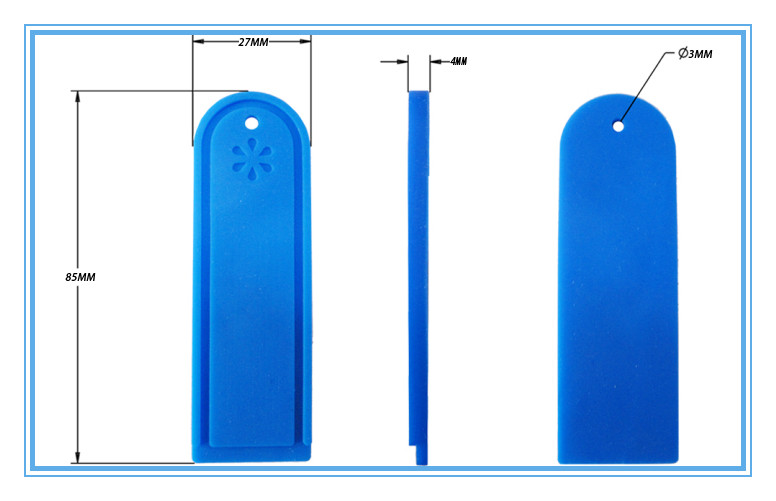
Size: Smaller tags (20x50mm) for lightweight linens, larger tags (85x27mm) for heavy uniforms.
Encoding: Pre-encoded serial numbers or custom data (e.g., client ID, textile type) to streamline tracking.
Color: High-visibility colors (e.g., orange, yellow) for easy tag inspection, or neutral colors for discreet placement.
If you’re ready to reduce tag damage, cut labor costs, and improve asset tracking, here’s how to get started:
Assess Your Needs: Calculate the volume of textiles you process daily, the average wash temperature, and your existing RFID hardware (readers, software) to choose the right tag specifications.
Request Samples: Test 50–100 silicone tags with your most common textiles (e.g., uniforms, linens) to verify durability and readability.
Review Our Complete Guide: For more insights on building a full RFID laundry system—including software integration and supplier selection—read RFID Laundry Tag: The Complete Guide to Smart Textile Tracking in 2025.
Industrial laundries that adopt RFID silicone laundry tags don’t just solve tracking problems—they gain a competitive edge by delivering faster, more reliable service. Contact us today to get a custom quote for bulk RFID silicone laundry tags and start optimizing your operations.
Avian Monitoring RFID Microchip for Bird Tracking
More >>
Herpetology Research PIT Tag for Reptiles and Amphibians
More >>
Laboratory Rodent Identification RFID Microchip
More >>
Durable NFC Button Tag with NTAG213 215 216. Ideal for access control, checkpoints, maintenance tracking, and authentication systems.
More >>
379.png)