D.O RFID TAG company is a RFID card manufacturers & factory, professional RFID card manufacturers , NFC tags suppliers and RFID Wristband company in shenzhen china for 15 years — Source Quality Products and Enjoy Efficient Service.
For businesses handling high volumes of textiles—industrial laundries processing 10,000+ items daily, large hotels with 500+ rooms, or uniform suppliers serving thousands of employees—speed and accuracy in tracking are make-or-break. Traditional methods like manual counting or HF RFID tags (which require close-range, one-at-a-time scanning) create bottlenecks: a laundry team might spend 8 hours daily sorting linens, while a hotel’s inventory check could take an entire weekend. This inefficiency costs time, money, and staff morale.
Enter UHF RFID laundry tags—the game-changer for bulk textile tracking. Operating at 860–960 MHz, these tags offer long read ranges (up to 8 meters) and the ability to scan 100+ items simultaneously. For businesses drowning in textile volume, UHF RFID transforms slow, error-prone processes into streamlined, real-time operations—cutting labor time by 50% or more and eliminating costly mistakes like missed or mislabeled items.
If you’re new to RFID laundry solutions, our foundational guide RFID Laundry Tag: The Complete Guide to Smart Textile Tracking in 2025 covers tag types, software integration, and supplier selection. In this article, we’ll dive deep into UHF RFID laundry tags: how they work, why they outperform other technologies for bulk tracking, how to install them, and real-world results from businesses that’ve made the switch.
Not all RFID tags are built for high-volume operations. UHF RFID laundry tags stand out for three core advantages that solve the unique pain points of businesses processing hundreds or thousands of textiles daily: long read range, fast bulk scanning, and compatibility with rugged workflows. Let’s break down why these features matter—and how they translate to bottom-line savings.
The most defining feature of UHF RFID laundry tags is their read range. Unlike HF tags (which require holding a scanner 10–15 cm from each item) or barcodes (which need line-of-sight), UHF tags can be read from 1–8 meters away—depending on the reader and environment. This eliminates the need for staff to bend, reach, or handle every textile, drastically speeding up processes.
For industrial laundries, this means game-changing efficiency at intake and output. A laundry facility in Dallas, Texas, installed fixed UHF readers above its laundry chutes: when a cart of soiled linens is pushed under the reader, all 50–100 tags are scanned in 2–3 seconds—no staff required to lift a finger. Before UHF, this process took 10 minutes per cart (staff had to scan each item with an HF reader), and the team processed 20 carts daily. With UHF, they now process 40 carts daily with the same number of staff—a 100% increase in throughput.
For large hotels, long read range simplifies inventory checks. A 500-room resort in Orlando used to assign 3 staff members to count its linen closet over a weekend (12 hours total). Now, one staff member pushes a cart-mounted UHF reader through the closet, scanning 2,000+ linens in 45 minutes. The time saved is redirected to guest-focused tasks, like restocking rooms faster.
UHF RFID laundry tags are designed for “anti-collision” scanning—meaning a single reader can distinguish between 100+ tags at once, even if they’re stacked, folded, or hidden in a cart. This is impossible with HF tags (which often struggle with 10+ items) or barcodes (which require individual scanning).
The impact on labor is staggering. Let’s compare:
Barcode Scanning: 1 item per second = 60 items per minute = 3,600 items per hour.
HF RFID Scanning: 5 items per second = 300 items per minute = 18,000 items per hour.
UHF RFID Scanning: 20 items per second = 1,200 items per minute = 72,000 items per hour.
A uniform supplier in Chicago serves 10,000 employees across 50 companies. Before UHF, its team spent 4 hours daily scanning uniforms as they were returned for cleaning (using barcodes). After switching to UHF RFID laundry tags, the same process takes 20 minutes—saving 18 hours weekly. That’s 936 hours annually, equivalent to hiring an extra part-time staff member for free.
Bulk textile operations are tough on tags. Linens and uniforms go through high-temperature washes (up to 95°C), tumble drying, and rough handling—so tags must be durable enough to keep up. UHF RFID laundry tags are typically encased in rugged silicone or reinforced plastic, designed to withstand 500+ wash cycles and resist damage from chemicals (like bleach) or physical impact.
A food service laundry in Atlanta processes 15,000 restaurant aprons and tablecloths weekly. It initially tested low-cost UHF tags from a non-specialized supplier—these failed after 100 washes, leading to 20% of aprons being unidentifiable. After switching to industrial-grade UHF RFID laundry tags (certified to AATCC Test Method 61 for wash durability), tag failure dropped to 2%, saving ,000 annually in replacement tags and lost aprons.
To get the most out of UHF RFID laundry tags, it’s helpful to understand the basics of how they operate—from the tag’s components to how readers communicate with them. This knowledge will help you choose the right equipment, avoid common mistakes, and troubleshoot issues.
A UHF RFID laundry tag has three key components, all designed to withstand harsh laundry conditions:
Chip: The “brain” of the tag, which stores a unique identifier (UID) and optional data (like linen type or laundry cycle count). UHF chips use passive technology—they don’t need batteries. Instead, they draw power from the radio waves emitted by the reader.
Antenna: A thin, flexible antenna (usually made of copper or aluminum) that receives radio waves from the reader and transmits the tag’s UID back. For laundry tags, the antenna is embedded in a protective material to avoid damage during washing.
Encasement: A rugged outer layer (silicone, reinforced plastic, or coated textile) that shields the chip and antenna from water, heat, and chemicals. For industrial use, look for encasements rated IP68 (fully waterproof) and resistant to temperatures up to 120°C.
The communication between UHF readers and tags happens in three quick steps:
Powering the Tag: The reader emits radio waves (at 860–960 MHz). When a UHF RFID laundry tag enters the reader’s range, the tag’s antenna absorbs these waves and converts them into electricity—powering the chip.
Transmitting Data: The chip sends its unique UID (and any stored data) back to the reader via the antenna. This happens in milliseconds—faster than the blink of an eye.
Processing Data: The reader sends the UID to a connected computer or cloud-based RFID laundry management system. The system matches the UID to the textile’s details (e.g., “UID: UHF-78901 = Hotel towel, Room 302”) and updates the textile’s status (e.g., “in laundry,” “clean,” “missing”).
Not all UHF RFID laundry tags are the same. When choosing tags, pay attention to these specs to ensure compatibility with your workflow:
Read Range: Look for tags rated for 3–5 meters (the sweet spot for most bulk operations). Longer ranges (6–8 meters) are useful for large warehouses but may cause interference if readers are close together.
Frequency: UHF tags operate at different frequencies depending on the region (e.g., 902–928 MHz in North America, 865–868 MHz in Europe). Choose tags tuned to your region’s frequency to avoid legal issues and ensure readability.
Memory: Most UHF tags have 96 bits of memory (enough for a UID and basic data). If you need to store more details (like laundry cycle counts or client IDs), opt for tags with 256 bits or more.
Durability Ratings: Confirm the tag is certified for:
Wash cycles: Minimum 200, ideal 500+.
Temperature: Up to 95°C (wash) and 120°C (dry).
Chemical resistance: Compatible with bleach, detergents, and fabric softeners.
Implementing UHF RFID laundry tags is straightforward, but it requires planning to align with your existing workflow. Below is a 5-step guide to ensure a smooth deployment—whether you’re an industrial laundry, large hotel, or uniform supplier.
Start by mapping how textiles move through your business—this will tell you where to place tags and readers. Common workflows include:
Industrial Laundry: Soiled textile intake → Sorting → Washing → Drying → Ironing → Clean textile output → Delivery to clients.
Large Hotel: Linen closet → Guest room → Soiled linen bin → Laundry → Linen closet.
Uniform Supplier: Uniform production → Tagging → Delivery to clients → Return for cleaning → Re-delivery.
Next, decide where to attach tags. For most textiles, the best spots are:
Towels/Sheets: Sew or heat-seal tags to the corner (out of sight, but easy for readers to detect).
Uniforms: Attach tags to the inside collar or seam (avoids irritation for wearers).
Heavy Items (Blankets/Robes): Use larger UHF tags sewn to the hem (more durable for thick fabrics).
A hotel in Las Vegas initially attached tags to the center of its sheets—this caused read issues, as the tag was hidden when sheets were folded. Moving tags to the corner solved the problem, with read rates jumping from 75% to 99%.
UHF readers come in two types—fixed and handheld—and each has a role in bulk tracking:
Fixed Readers: Mounted in strategic locations (above laundry chutes, at the entrance to linen closets, or on conveyor belts). They’re ideal for high-volume, repeatable processes (like intake and output). Look for readers with adjustable power (to control read range) and Ethernet/Wi-Fi connectivity (to sync data in real time).
Handheld Readers: Portable devices for spot checks (e.g., verifying a missing towel in a guest room or counting inventory in a small storage area). Choose rugged, waterproof models (IP67 or higher) that can withstand drops and exposure to water.
For industrial laundries, a typical setup includes 2–3 fixed readers (intake, output, sorting area) and 1–2 handheld readers (for troubleshooting). For large hotels, 1 fixed reader at the laundry entrance and 2 handheld readers (for housekeeping and inventory) work well.
Each UHF RFID laundry tag needs a unique UID, but you can also store additional data to streamline operations. What you encode depends on your business:
Industrial Laundries: Client ID (to track which textiles belong to which hotel/restaurant), textile type (towel, apron), and laundry cycle count.
Hotels: Room number (to assign linens to specific rooms), linen type (king sheet, bath towel), and purchase date (to track lifespan).
Uniform Suppliers: Employee ID (to link uniforms to staff), company ID (for multi-client management), and size (to avoid mix-ups).
Encoding can be done in two ways:
Pre-encoded by Supplier: Most suppliers will encode tags with UIDs before shipping—saves time if you don’t need custom data.
On-Site Encoding: Use a handheld UHF reader to add custom data (like client IDs) after receiving tags. This is useful for businesses with changing needs.
A uniform supplier in Toronto pre-encodes tags with employee IDs and company IDs. When a client orders 500 uniforms, the supplier simply scans the tags into the client’s account—no manual data entry required. This cuts order processing time by 40%.
Once you have tags and readers, follow these steps to install and test:
Mount Fixed Readers: Position them at least 2 meters above the ground (to cover carts of textiles) and away from metal objects (which can interfere with radio waves). Use a signal tester (available from most suppliers) to adjust the reader’s power—you want to read all tags in a cart without picking up tags from adjacent areas.
Connect to Software: Link readers to your RFID laundry management system (cloud-based or on-premise). Test the connection by scanning a few tags—ensure the system updates the textile’s status in real time.
Run a Pilot Test: Tag 100–200 textiles and run them through your workflow. Check for:
Read Rate: Aim for 98%+ (if read rate is low, adjust reader position or tag placement).
Data Accuracy: Verify that the system correctly logs each textile’s status (e.g., “in laundry” after intake, “clean” after washing).
Staff Comfort: Ask team members if the system is easy to use—address any pain points (e.g., a handheld reader that’s too heavy).
An industrial laundry in Detroit ran a 2-week pilot with 200 towels. Initial read rate was 92%—the team realized metal shelves near the reader were causing interference. Moving the reader 1 meter away from the shelves boosted read rate to 99.5%.
UHF RFID systems are only effective if staff use them correctly. Focus training on role-specific tasks:
Laundry Intake Staff: How to position carts under fixed readers, troubleshoot “no-read” tags (e.g., repositioning a folded towel), and log exceptions (e.g., a torn towel that needs repair).
Housekeeping Staff: How to use handheld readers to scan linens in guest rooms, flag missing items, and check inventory levels.
Managers: How to access the system’s dashboard to view key metrics (e.g., daily processing volume, tag read rate, linen loss) and make data-driven decisions.
Once staff are comfortable, scale up by tagging all textiles. A hotel in Miami tagged 10,000 linens over 4 weeks—doing 2,500 per week during off-peak hours to avoid disrupting operations.
To see the tangible impact of UHF RFID laundry tags, let’s look at “Industrial Laundry Solutions (ILS)—a mid-sized laundry facility in Houston that processes 15,000 textiles daily (hotel linens, restaurant aprons, and healthcare scrubs) for 30+ clients.
Slow Processing: ILS’s team of 8 spent 6 hours daily scanning textiles at intake and output (using HF readers), limiting their ability to take on new clients.
High Error Rates: Manual data entry (linking HF scans to client accounts) led to 5% of textiles being misassigned—costing ,000 monthly in reprocessing and client refunds.
Linen Loss: 3% of textiles were lost annually (450 items ×20averagecost=9,000) because ILS couldn’t track them beyond intake.
Total annual cost of inefficiency:45,000 )30,000 in labor,12,000inerrors,9,000 in loss).
ILS invested ,000 upfront in:
15,000 industrial-grade UHF RFID laundry tags (0.80each=12,000).
3 fixed UHF readers (intake, output, sorting area) = ,500.
2 handheld UHF readers = ,500.
Cloud-based RFID laundry management software (,000/year subscription).
Labor Time Cut by 67%: Scanning time dropped from 6 hours to 2 hours daily—freeing up staff to process 5,000 more textiles weekly. ILS took on 10 new clients without hiring additional staff, increasing revenue by ,000 annually.
Error Rates Reduced to 0.5%: The system automatically links tags to client accounts, eliminating manual data entry. Misassignments fell from 2,000 to 100 monthly—a savings of ,800.
Linen Loss Dropped by 60%: Real-time tracking let ILS identify and recover lost textiles (e.g., a cart of hotel towels left in the delivery area). Annual loss fell from 9,000to 3,600—a savings of ,400.
Total annual savings + revenue gain: 88,200.NetROIafter1year: 88,200 –5,000(softwarerenewal)=83,200.
Payback period: 2.6 months.
As ILS’s Operations Director, Maria Gonzalez, said: “UHF RFID didn’t just save us money—it let us grow. We’re processing more textiles, serving more clients, and our team is less burned out. It’s the best investment we’ve made in years.”
Even with the right technology, common mistakes can limit the effectiveness of your UHF RFID system. Here are four to watch for—and how to fix them.
UHF radio waves are easily blocked by metal (e.g., laundry machines, metal shelves) and absorbed by water (e.g., wet linens). This can cause “dead zones” where tags aren’t read.
Fix:
Keep fixed readers at least 1 meter away from metal objects.
For wet textiles (e.g., washed linens), use readers with higher power (to penetrate moisture) or wait until textiles are partially dried before scanning.
Use a signal tester to map your space and identify dead zones—add additional readers if needed.
A hotel in Chicago initially placed a fixed reader next to a metal laundry machine—read rate was 70%. Moving the reader 1.5 meters away boosted read rate to 99%.
It’s tempting to opt for cheap UHF tags, but they’ll cost more in the long run. Low-quality tags often fail after 100–200 washes, leading to replacement costs and lost textiles.
Fix:
Invest in industrial-grade UHF RFID laundry tags certified to AATCC 61 (wash durability) and IP68 (waterproofing).
Ask suppliers for sample tags—wash them 50+ times and test readability before placing a large order.
Look for tags with a warranty (most reputable suppliers offer 1–2 years).
A restaurant laundry in Denver bought 0.30UHFtagsinsteadof 0.80 industrial-grade ones. The cheap tags failed after 150 washes, costing ,000 in replacements—more than the savings from buying cheap tags.
UHF RFID tags are only as useful as the software that tracks them. If your system doesn’t integrate with your existing tools (e.g., client management software, inventory spreadsheets), you’ll waste time on manual data entry.
Fix:
Choose software tha
Avian Monitoring RFID Microchip for Bird Tracking
More >>
Herpetology Research PIT Tag for Reptiles and Amphibians
More >>
Laboratory Rodent Identification RFID Microchip
More >>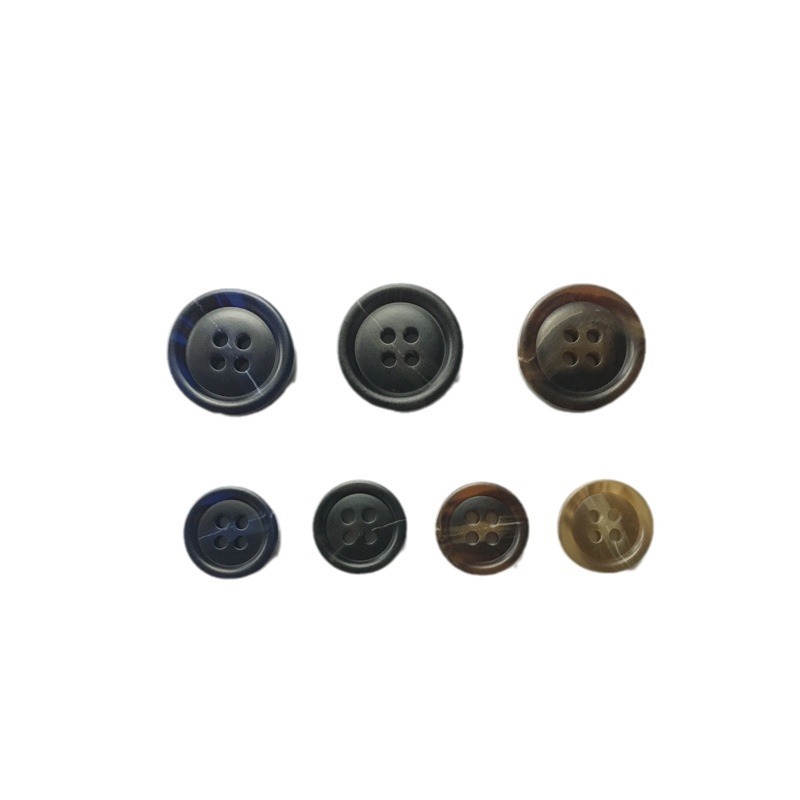
Durable NFC Button Tag with NTAG213 215 216. Ideal for access control, checkpoints, maintenance tracking, and authentication systems.
More >>
379.png)