D.O RFID TAG company is a RFID card manufacturers & factory, professional RFID card manufacturers , NFC tags suppliers and RFID Wristband company in shenzhen china for 15 years — Source Quality Products and Enjoy Efficient Service.
how to implant PIT tags, PIT tag implantation salmon, PIT tag implantation trout, fish PIT tagging procedure, salmon tagging method, trout tagging method, PIT tag surgery fish, PIT tag needle guide, FDX-B implantation, HDX tag implantation, fish hatchery PIT tagging, safe PIT tag insertion, PIT tagging step by step, juvenile fish PIT tagging, salmonid PIT tagging
Step-by-step guide on how to implant PIT tags in salmon and trout safely. Learn tools, needle sizes, best practices, and complete implantation procedures recommended for hatcheries and research programs.
Correct PIT tag implantation is the foundation of every successful salmonid monitoring program. Whether you are tagging juvenile trout in a hatchery or adult salmon during migration research, a precise and standardized implantation procedure ensures high tag retention, lower stress, and accurate long-term data.
This guide explains the recommended tools, needle sizes, handling steps, anesthesia considerations, and post-care details based on widely accepted fisheries research standards.
A PIT tag is designed to last for the full life cycle of the fish. To ensure that level of reliability, implantation must be:
Safe
Consistent
Minimally invasive
Repeatable by different technicians
Suitable for small and large fish
Poor technique increases tag rejection, infection, and mortality—directly affecting your study results.
To perform safe PIT tag implantation, prepare:
PIT tag injectors
Stainless-steel needles (size depends on tag model)
PIT tags (FDX-B or HDX)
Fish anesthetic (MS-222 or approved local equivalent)
Gloves
Disinfectant and ethanol
Clean tagging station
Oxygenated recovery tank
We can supply PIT tags, injectors, and needles suitable for all salmon and trout sizes.
Matching the needle to the tag size is crucial:
Recommended needle: 1.25 mm ID
Tags: 1.4×8 mm, 1.5×8 mm, 2×8 mm FDX-B
Needle: 1.4–1.6 mm ID
Tags: 2×10 mm, 2×12 mm
Needle: 2.0 mm ID
Tags: 3×13 mm, 3.85×23 mm HDX/FDX-B
Selecting the proper needle reduces tissue damage and increases tag retention.
Below is the standard implantation workflow followed by hatcheries, universities, and river monitoring programs worldwide.
Place the salmon or trout into an approved anesthetic solution until it reaches light sedation:
Slow gill movement
Reduced swimming response
No stress-based escape reactions
Maintaining proper anesthesia ensures safe handling and precise tag placement.
Lay the fish ventral-side up in a soft cradle or foam groove.
Ensure:
No pressure on the gills
Stable body alignment
Easy access to the insertion site
The PIT tag should be implanted into the peritoneal cavity, usually:
Slightly anterior to the pelvic girdle
Off-center to avoid midline organs
Away from major vessels
This location gives the highest retention rate.
With the needle facing posteriorly:
Gently slide the needle through the body wall
Enter at a shallow angle
Avoid excessive force
A clean insertion creates a small incision that closes quickly after removal.
Using the injector:
Press the plunger smoothly
Release the tag inside the cavity
Withdraw the needle carefully in a continuous motion
If performed correctly, bleeding is minimal.
Place the fish in an oxygenated recovery tank until:
Swimming balance returns
Normal breathing rhythm resumes
Active swimming begins
Most juvenile salmonids recover within 1–3 minutes.
Using needles that are too large
Inserting tags into muscle instead of the cavity
Applying excessive pressure
Tagging fish not fully sedated
Reusing dull needles
These mistakes increase tag loss and post-tagging stress.
Our available PIT tag sizes include:
FDX-B:
1.25×7 mm, 1.4×8 mm, 1.5×8 mm, 2×6 mm, 2×8 mm, 2×10 mm, 2×12 mm, 3×13 mm, 3.85×23 mm, 3.85×32 mm, 4×34 mm
HDX:
2×12 mm, 3×13 mm, 3.85×23 mm, 3.85×32 mm, 4×34 mm
For salmon and trout, the most commonly used sizes are:
2×8 mm (juveniles)
2×12 mm (larger juveniles / small adults)
3×13 mm HDX (adults)
We supply complete PIT tagging solutions from our factory:
FDX-B and HDX tags in all common sizes
Stainless-steel needles for all fish sizes
Durable injector bodies
Bulk sterilized needle packs
OEM coding (hex + decimal)
Fast global shipping
Consistent QC for high tag retention
Our products are used by fisheries agencies, universities, and hatcheries worldwide.
Typically less than 5 seconds once the fish is positioned.
Rejection is very low when proper needle size and technique are used.
Yes. 2×8 mm tags are specifically designed for small fish.
/pit-tags/
Avian Monitoring RFID Microchip for Bird Tracking
More >>
Herpetology Research PIT Tag for Reptiles and Amphibians
More >>
Laboratory Rodent Identification RFID Microchip
More >>
Durable NFC Button Tag with NTAG213 215 216. Ideal for access control, checkpoints, maintenance tracking, and authentication systems.
More >>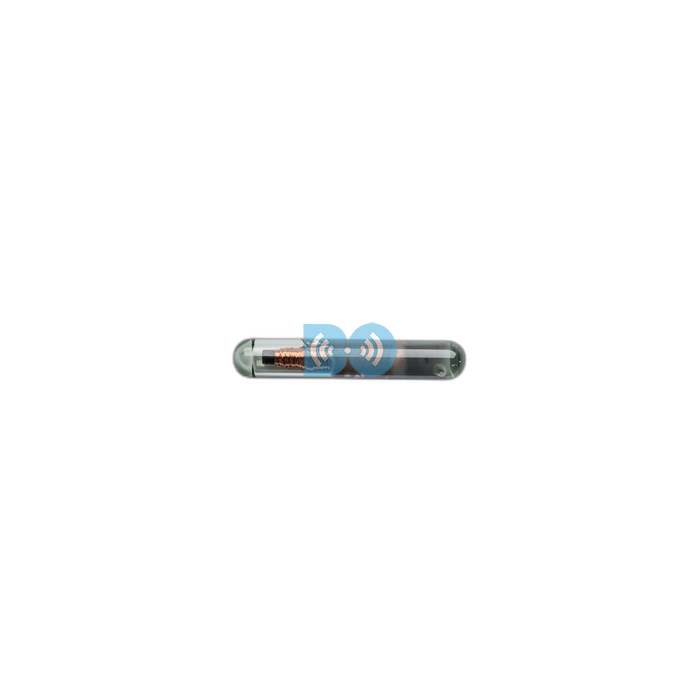
379.png)